Skip to content
Washread

Plate 00 · The care code, ISO 3758

What that label
actually means.

Five little symbols, a hundred-odd variants, and almost nobody can name them. So everything gets hand-washed, or everything goes in the machine and something comes out ruined.

Photograph the tape sewn into the seam. Washread tells you what it forbids, what it allows, and — the part nobody else prints — what it does not cover at all.

Read a labelSee what it costs

Free plan · no card

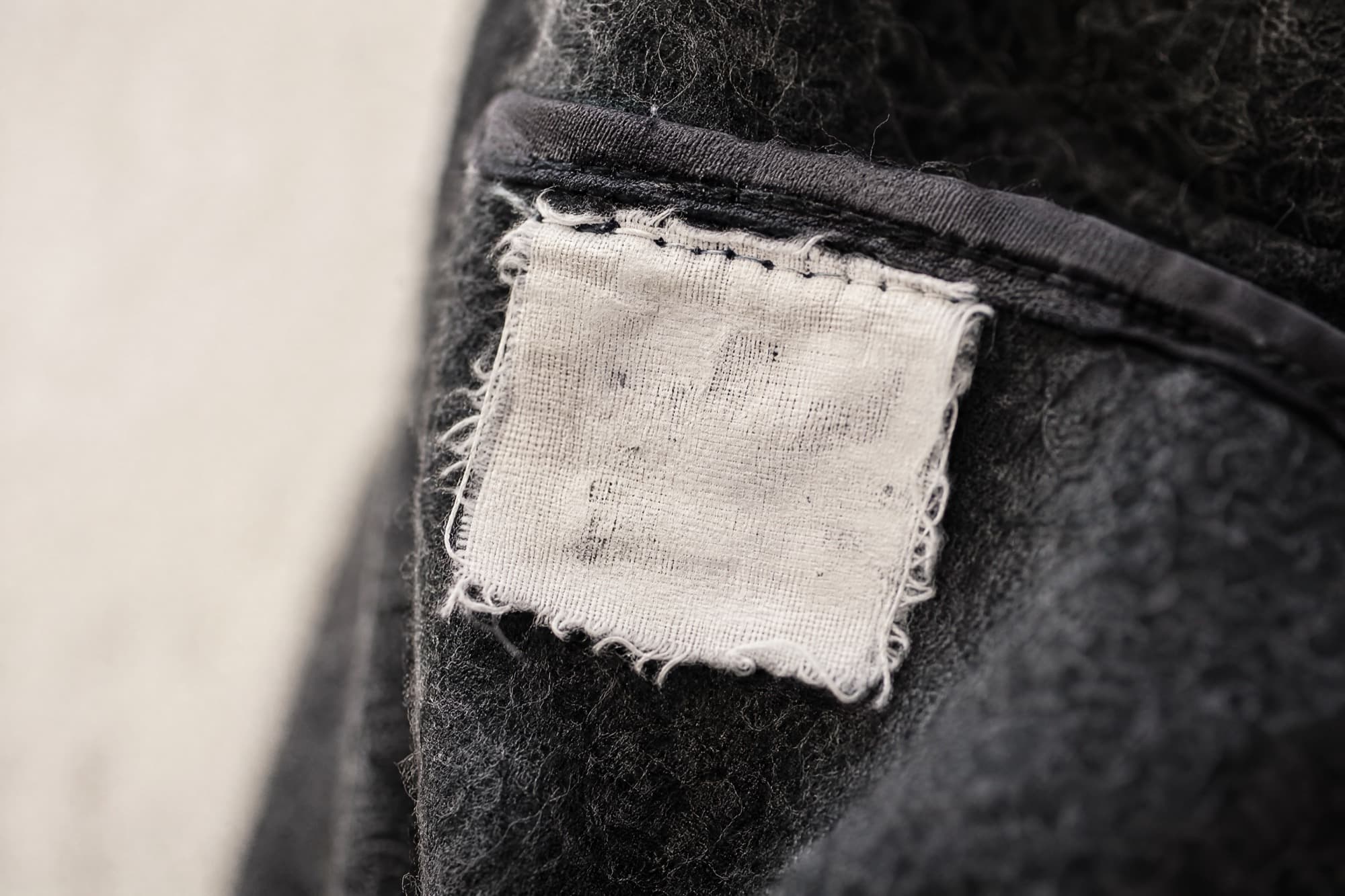
Extreme close-up of a small white care label stitched into a charcoal wool seam. Its printed markings are worn away and unreadable.
Plate 00a — wool coat, label worn past reading. This is the ordinary case.

Symbol translator

Point at one, or press Tab then the arrow keys

Wash at 30 °C

You can put this in the machine, but keep the water at 30 °C or cooler.

Plate 06 · The information gap

Written under a legal duty. Read by almost nobody.

Care labelling is an obligation for the people who make clothes and a private language for the people who wear them. Somebody in a factory had to put that tape there, and somebody had to decide which of the hundred-odd variants applied. Then it was sewn into a seam, and from that moment on nobody read it again.

Washread is built by a clothing company for the other side of that gap. Not to sell you anything to wash with — only to tell you what the tape says.

Eleven blank white and ivory garment care labels arranged in a specimen grid on warm off-white paper.
Eleven labels, cut out and laid flat. Not one of them was read.

Plate 07 · How it goes

Photograph. Read. Pin it to the wall.

Three steps, and the last one is the point. A care instruction is something you check again in six months with a basket in your other hand — so it has to end up on paper, not in an app you have to open.

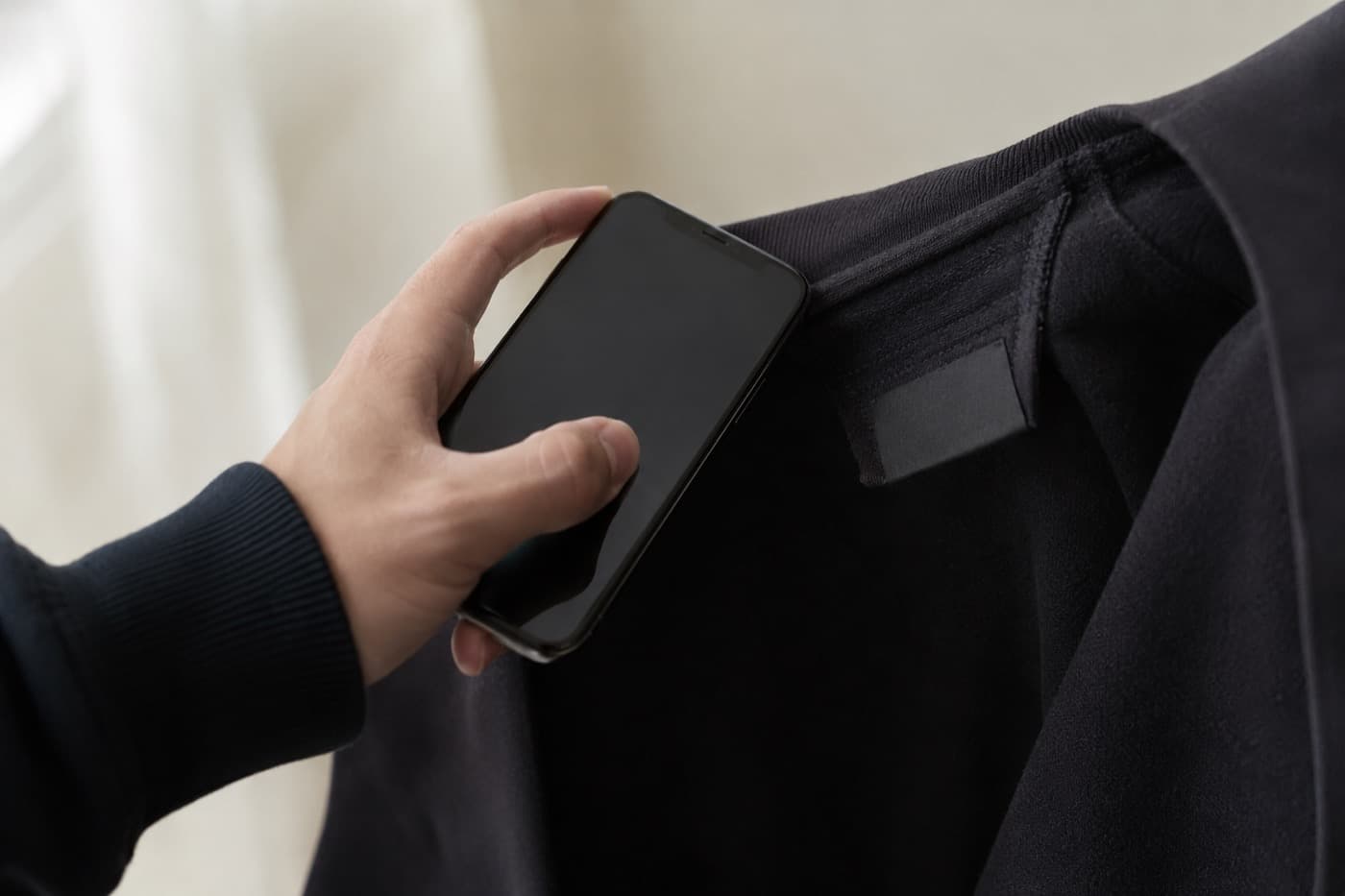
  1. A hand holding a phone close to the care label sewn inside a dark garment.

    Step 01

    Photograph the label

    The small tape sewn into the side seam or the back of the neck. Get close, keep it flat, and let the light fall across it rather than straight at it.

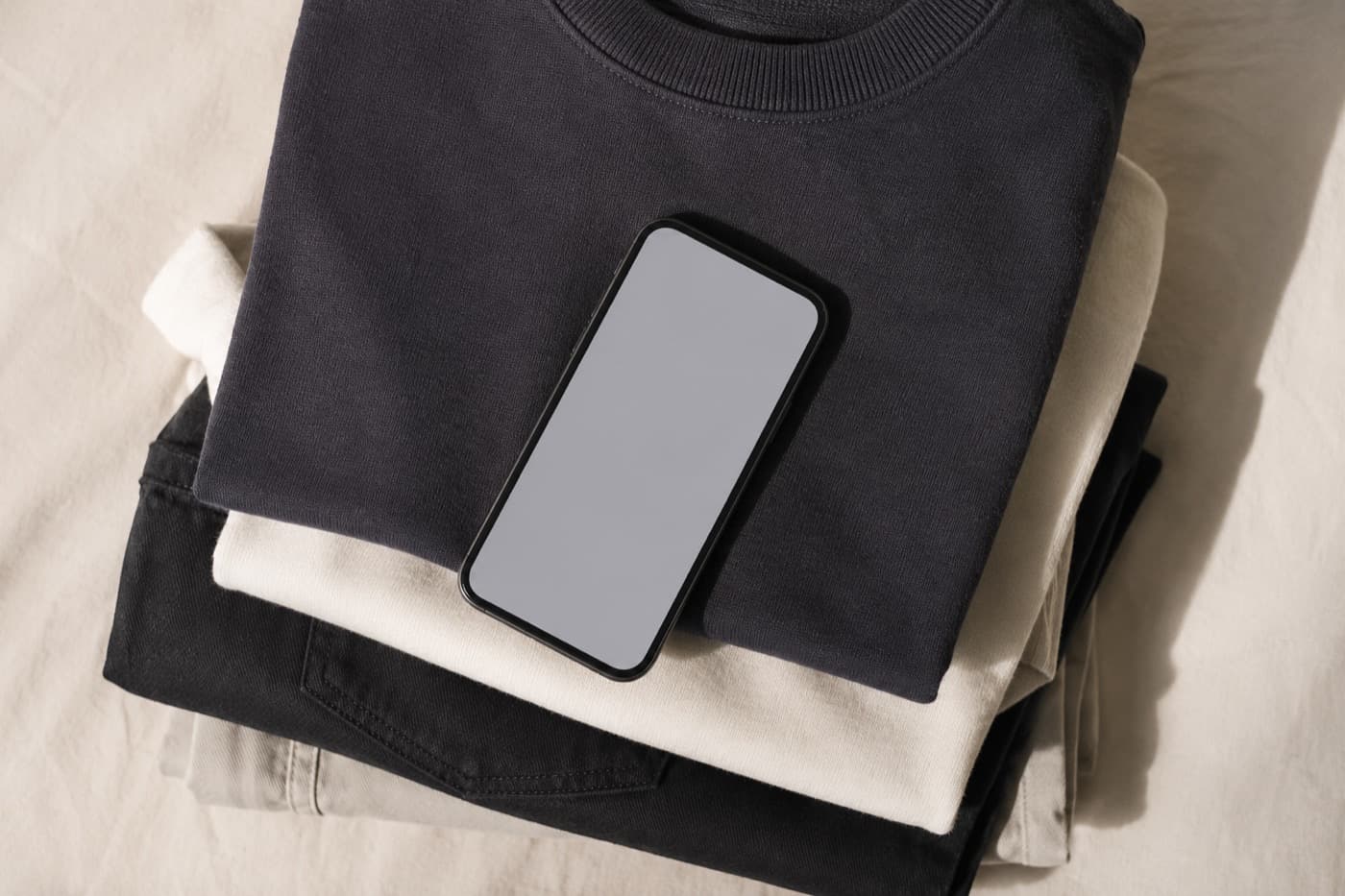
  2. A phone lying face up on a stack of folded charcoal and off-white garments.

    Step 02

    Read what it forbids, first

    You get three separate answers, never blended: what the label forbids, what it allows, and what it does not cover. Ask a follow-up if your situation is not in the label — a wine stain, a machine with no gentle cycle.

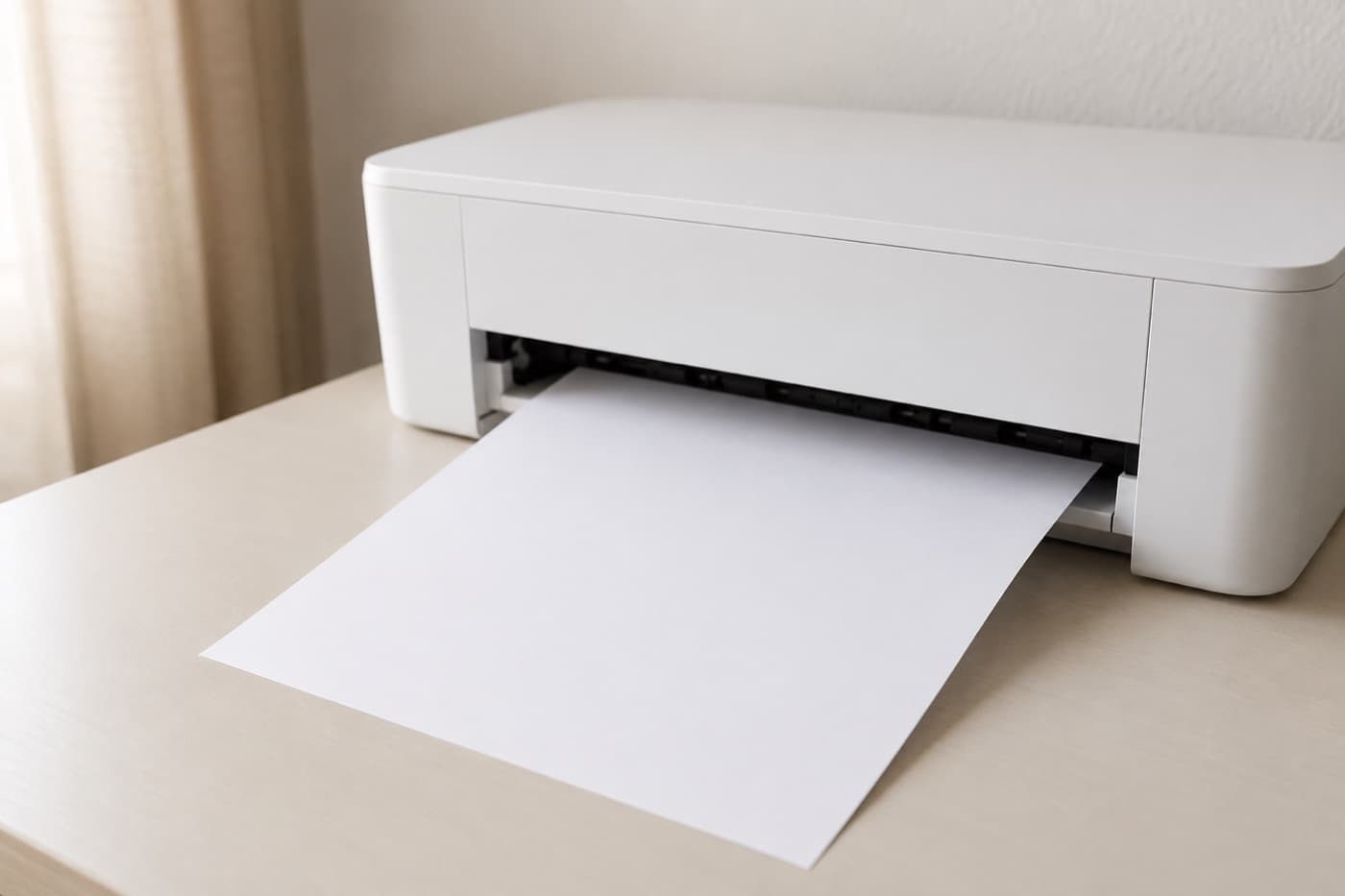
  3. A blank white sheet emerging from a small home printer on a plain desk.

    Step 03

    Print it and pin it up

    One page, large type, no symbols at all. It is meant to be stuck to the wall beside the machine and read at arm's length with wet hands, so it is set to survive a black-and-white print.

Plates 01 – 05 · The whole code, one screen each

There are only five shapes. Learn the shapes and the variants stop mattering.

01

The tub

Can it go in the machine?

A tub means water. The number is the ceiling, not the target.

Every washing instruction is a tub. The number inside is the hottest the water may get — 30 means 30 or cooler, never warmer. A bar underneath asks for less agitation and a slower spin; two bars ask for the gentlest thing your machine can do. A hand inside means no machine at all.

A crossed tub is the strongest thing a label can say: no water, anywhere, ever.

  • Wash at 30 °C

  • Wash at 40 °C

  • Wash at 60 °C

  • Wash at 40 °C, mild cycle

  • Wash at 30 °C, very mild cycle

  • Hand wash

  • Do not wash

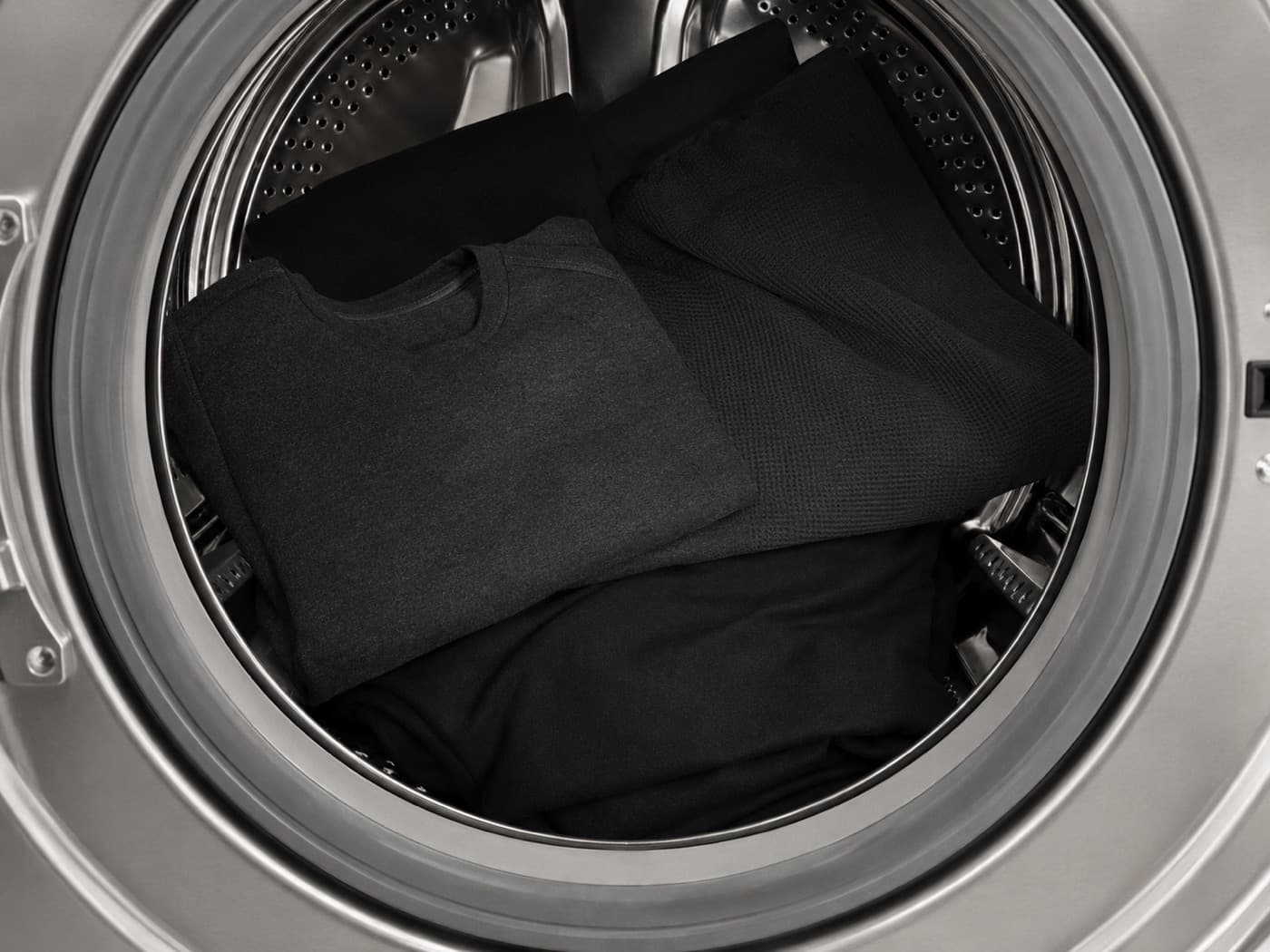
Looking down into an open stainless steel washing machine drum holding folded dark garments.
02

The triangle

Can I get the stain out with bleach?

A triangle only ever talks about bleach. Three states, no more.

An empty triangle allows any bleach. Two diagonal strokes inside narrow it to oxygen bleach only — the non-chlorine kind. A cross through it forbids both. There is no fourth variant, and no variant that says anything about a particular stain.

Plenty of stain removers contain a whitening agent. A crossed triangle covers those too.

  • Any bleach allowed

  • Oxygen bleach only

  • Do not bleach

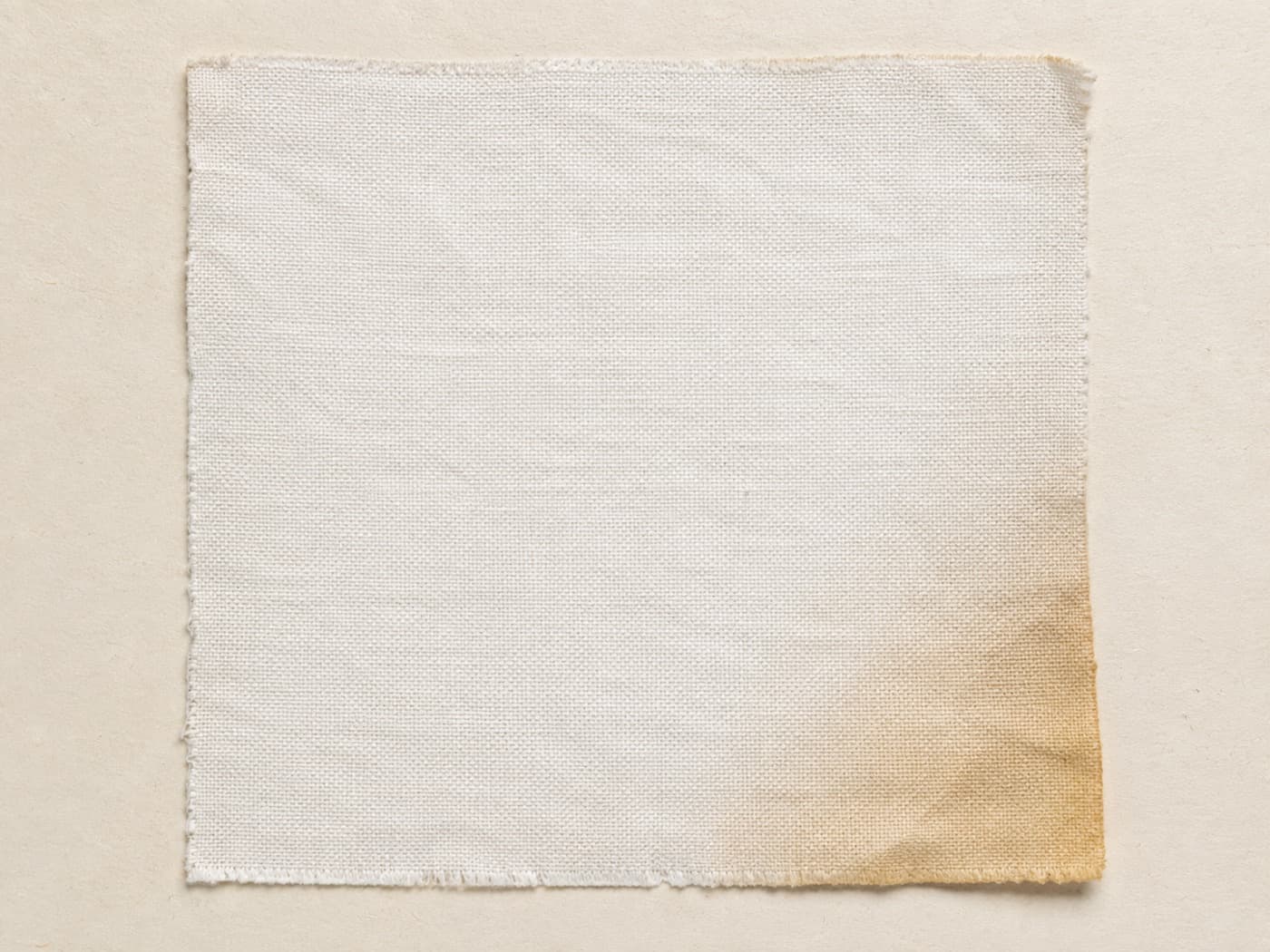
A square swatch of white cotton fabric on warm off-white paper, one corner slightly aged.
03

The square

Dryer, or over a chair?

A square is drying. A circle inside it means the dryer.

Square with a circle: tumble drying, and the dots are heat — one for low, two for normal. Square with lines instead: dry it in the air. A vertical line means hang it, three vertical lines mean hang it dripping wet, a horizontal line means lay it flat. A stroke across the top-left corner adds: out of the sun.

A crossed circle-in-square forbids the dryer. It does not forbid drying — read the lines.

  • Tumble dry, low heat

  • Tumble dry, normal heat

  • Do not tumble dry

  • Line dry

  • Drip dry

  • Dry flat

  • Line dry in the shade

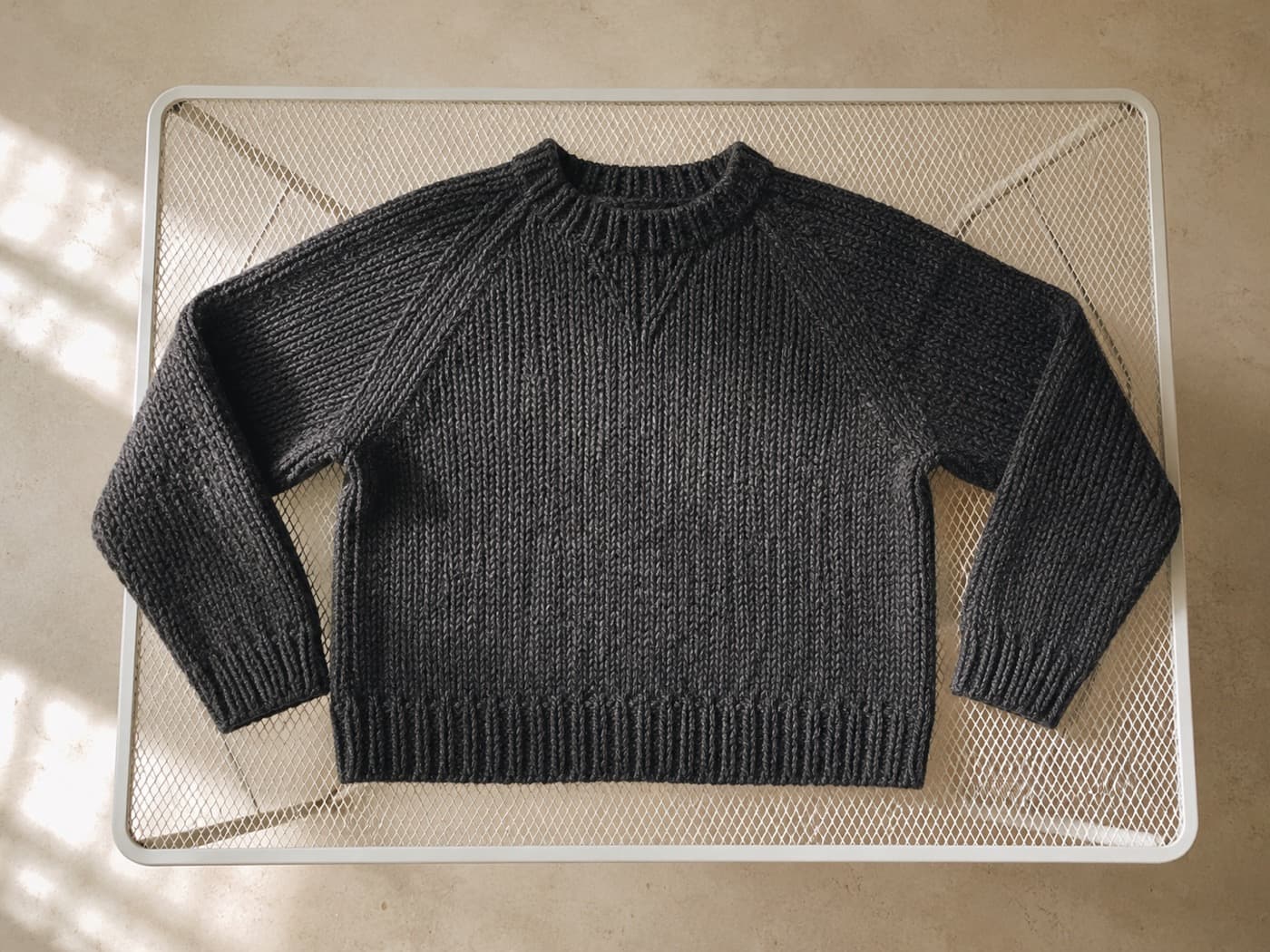
A charcoal wool knit sweater laid flat on a white mesh drying rack in daylight.
04

The iron

What number on the dial?

One iron, three dots, and a temperature you can actually set.

The dots map onto the settings already printed on your iron. One dot is the coolest, for synthetics. Two dots is the middle, for wool and mixes. Three dots is the hottest, for cotton and linen. The label does not know whether your iron is accurate; it only names the band.

A crossed iron means no iron. It says nothing about a steamer, because the code has no symbol for one.

  • Iron, low

  • Iron, medium

  • Iron, high

  • Do not iron

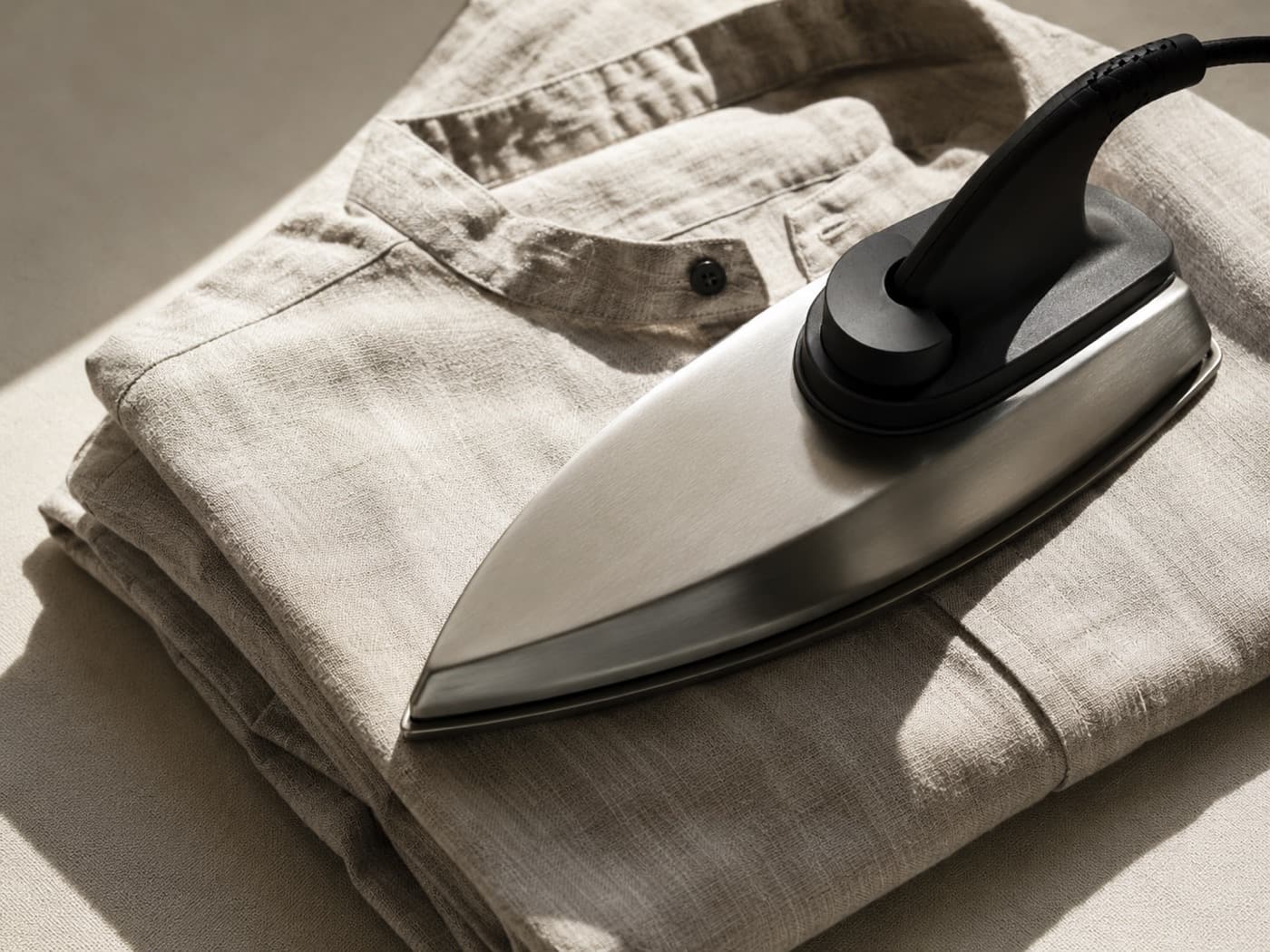
A matte steel iron soleplate resting on a folded natural linen shirt in raking side light.
05

The circle

Is this a job for someone else?

A circle is addressed to the cleaner, not to you.

The letter inside tells a professional which process to use: P and F are dry-cleaning solvents, W is professional wet cleaning. A bar underneath asks them to be gentler. You are not expected to act on the letter — you are expected to hand the garment over and let them read it.

A crossed circle means no dry cleaning. A crossed W means no professional wet cleaning either.

  • Dry clean, P

  • Dry clean, P, mild

  • Dry clean, F

  • Professional wet clean

  • Professional wet clean, mild

  • Do not dry clean

  • Do not wet clean

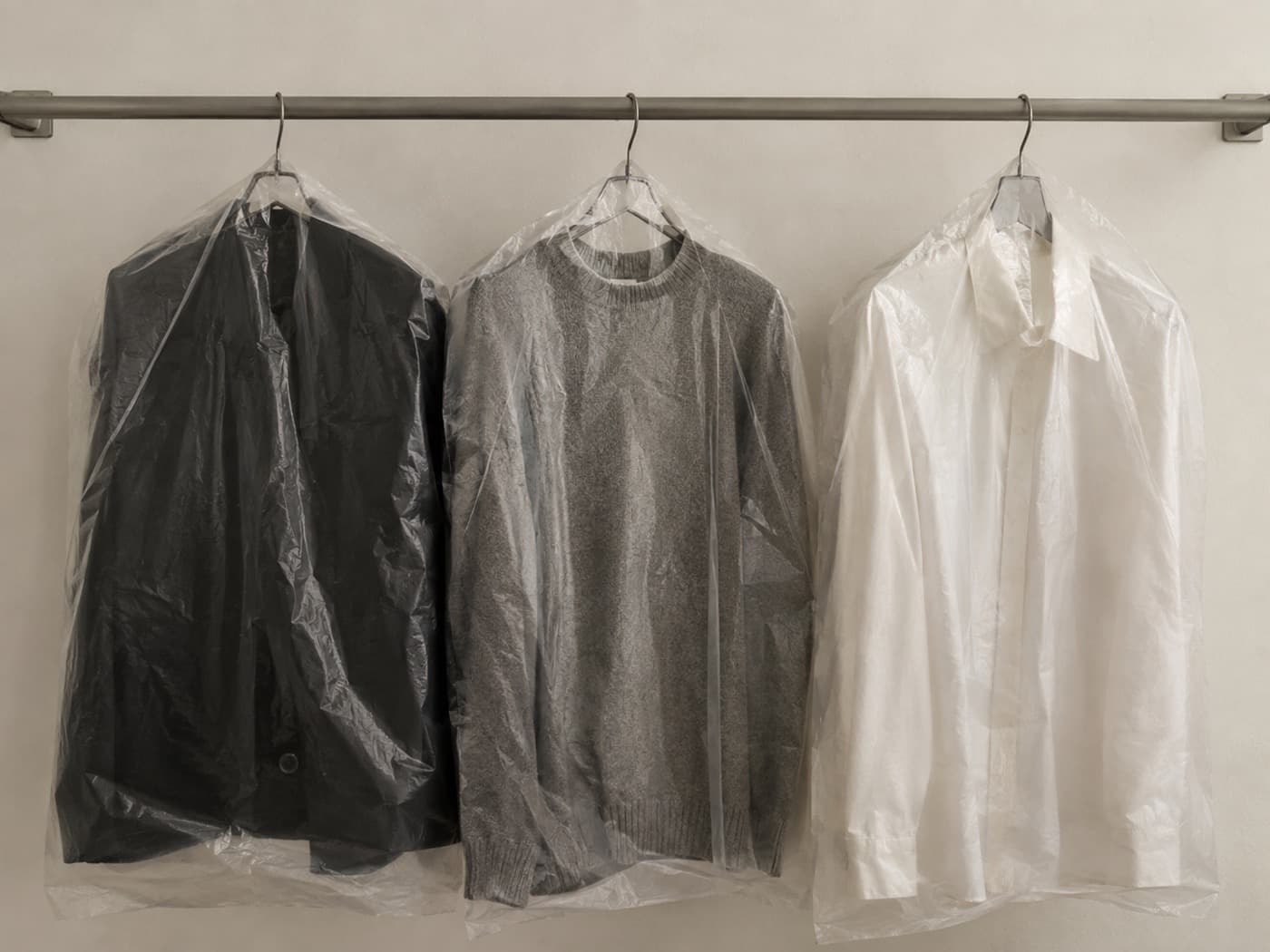
Three garments sealed in translucent protective film hanging on a plain steel rail.

Plate 08 · What you take away

One page. Three blocks. No symbols on it at all.

The card is typography, not a picture — every word on it is set by this site, so nothing on it can be invented. Below are examples of the card the tool produces, including one from a label that was worn past reading.

Care card · read 2026-08-29

Charcoal wool coat

Composition on the label: 80% wool, 20% polyamide

Read from: Do not wash · Do not bleach · Do not tumble dry · Iron, medium · Dry clean, P

The label forbids

  • Do not put this in water. Not the machine, not the sink, not a quick rinse of one sleeve.
  • Do not use bleach of any kind, including the whitening agent in a stain remover.
  • Do not tumble dry it.

The label allows

  • You may iron it on the middle setting, around 150 °C.
  • You may take it to a dry cleaner. The P is their instruction, not yours.

The label does not say — so neither do we

  • The label does not say what to do about a specific stain. Take it to the cleaner and point at the stain.
  • The label does not say anything about steaming or airing, because the care code has no symbol for either.
  • The label does not know whether the coat has already been damaged, shrunk or re-dyed.
Washread reads what is printed on the label. It is not an inspection of the garment, and a label never covers every situation. Washread does not recommend detergents or products and accepts no responsibility for damage caused by washing, drying or ironing. If in doubt, do the gentlest thing the label allows.

Care card · read 2026-08-29

Second-hand knit, label mostly worn away

Read from: Wash at 30 °C · Do not bleach

Low confidence — read this first

We could not read part of this label clearly. Treat the result as a guess and check the garment yourself.

Confidence 42%. Where the label was unreadable we have not guessed — the unreadable parts are listed under “The label does not say”, and the safest handling is to do the gentlest thing available.

The label forbids

  • Do not bleach it. The crossed triangle is still legible and it is unambiguous.

The label allows

  • The tub appears to read 30. If that is right, a 30 °C wash is permitted — but see the warning above before you rely on it.

The label does not say — so neither do we

  • We could not read the drying instruction at all. Treat the tumble dryer as forbidden until you know otherwise.
  • We could not read the ironing instruction. If you must press it, use the coolest setting and a cloth.
  • The fibre composition is gone. Nothing here can be inferred from how the fabric feels.

Washread reads what is printed on the label. It is not an inspection of the garment, and a label never covers every situation. Washread does not recommend detergents or products and accepts no responsibility for damage caused by washing, drying or ironing. If in doubt, do the gentlest thing the label allows.

Example · a label we could not fully read. We do not guess.

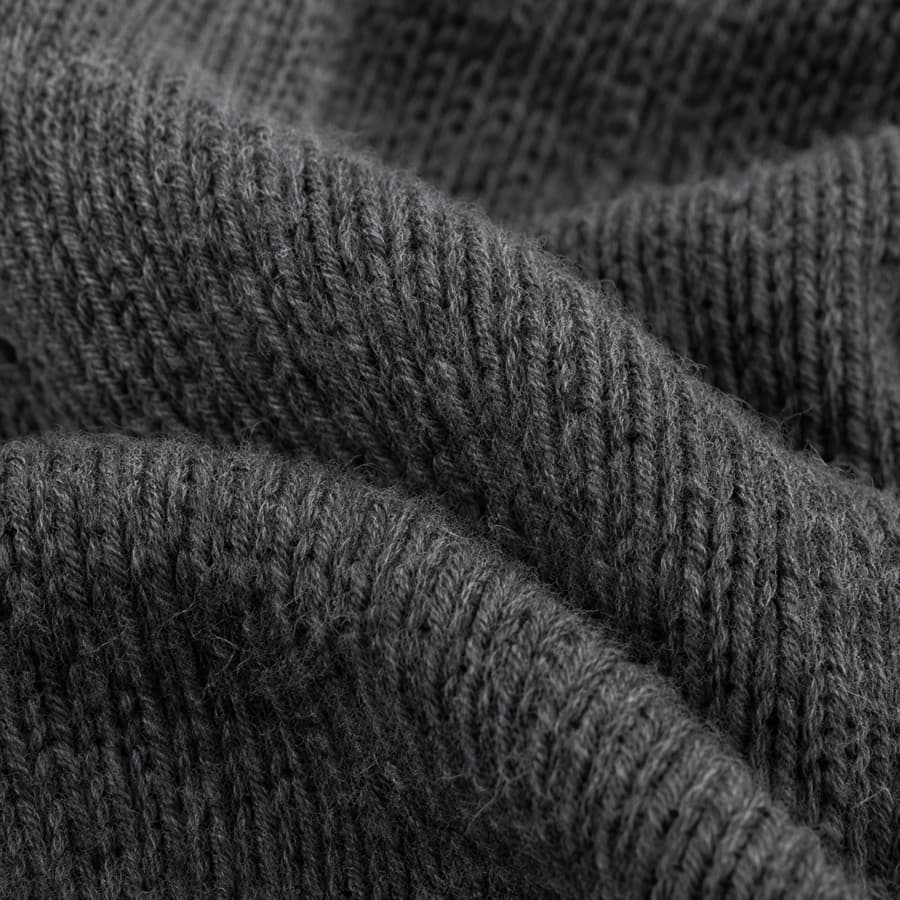
  • Macro photograph of charcoal merino wool knit.Merino wool
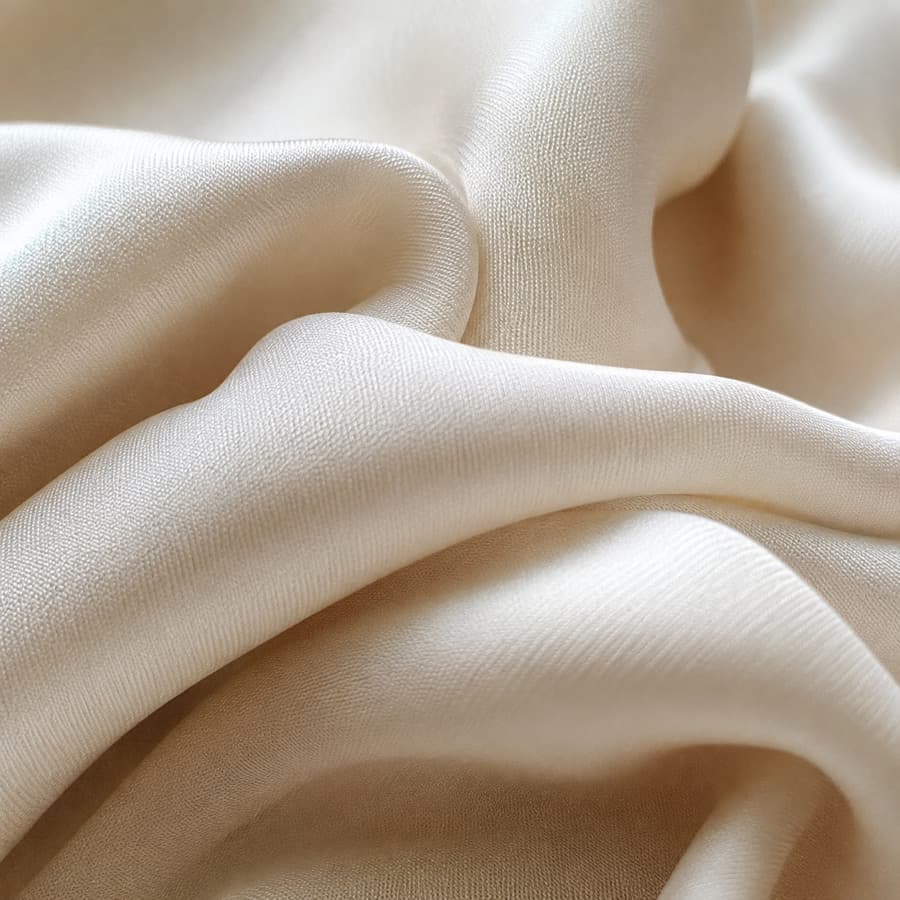
  • Macro photograph of ivory silk crepe in soft folds.Silk crepe
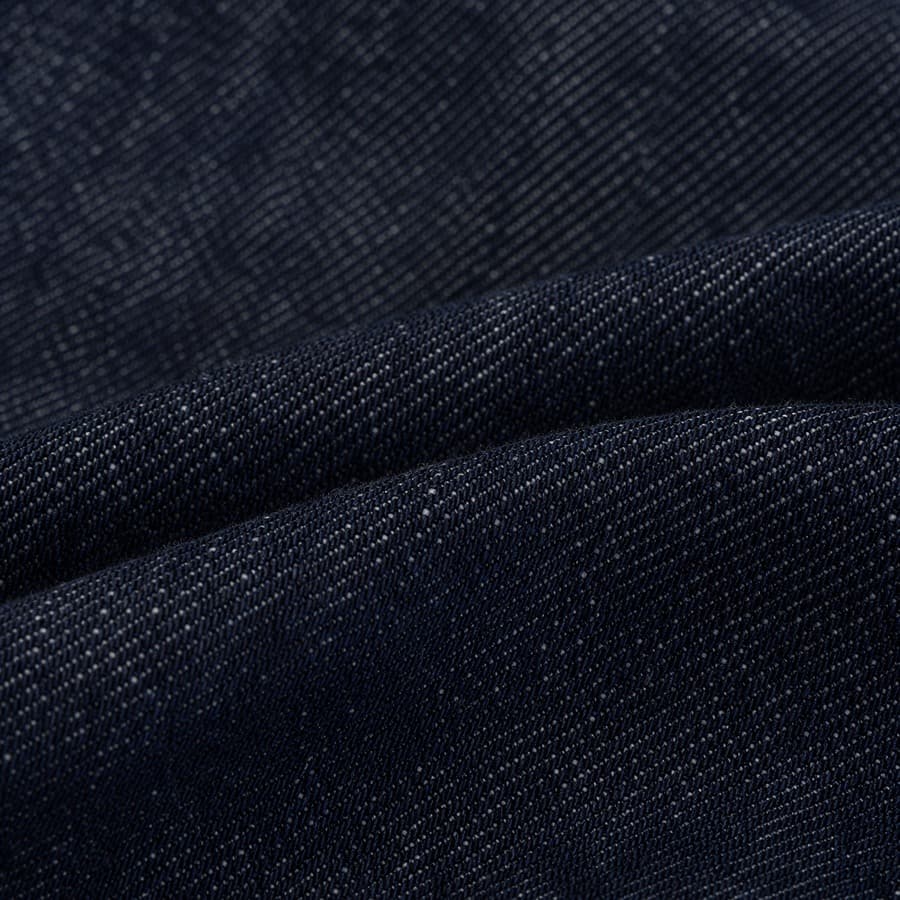
  • Macro photograph of indigo raw denim twill.Raw denim
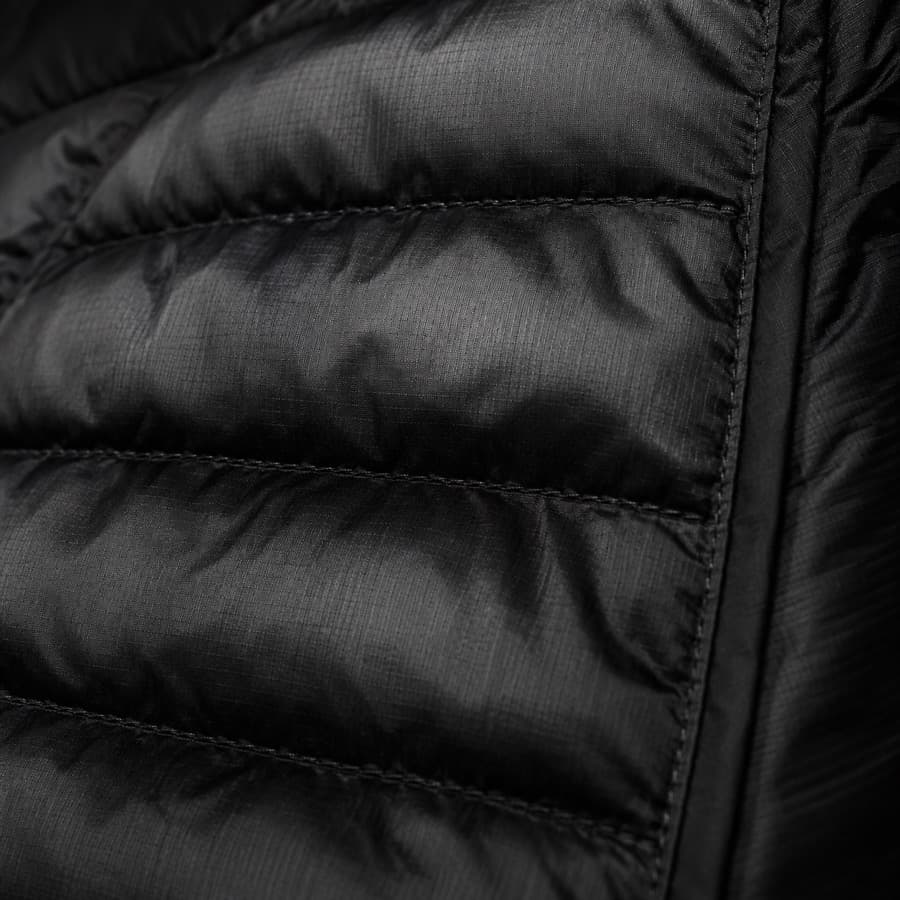
  • Macro photograph of a black quilted down jacket panel.Quilted down
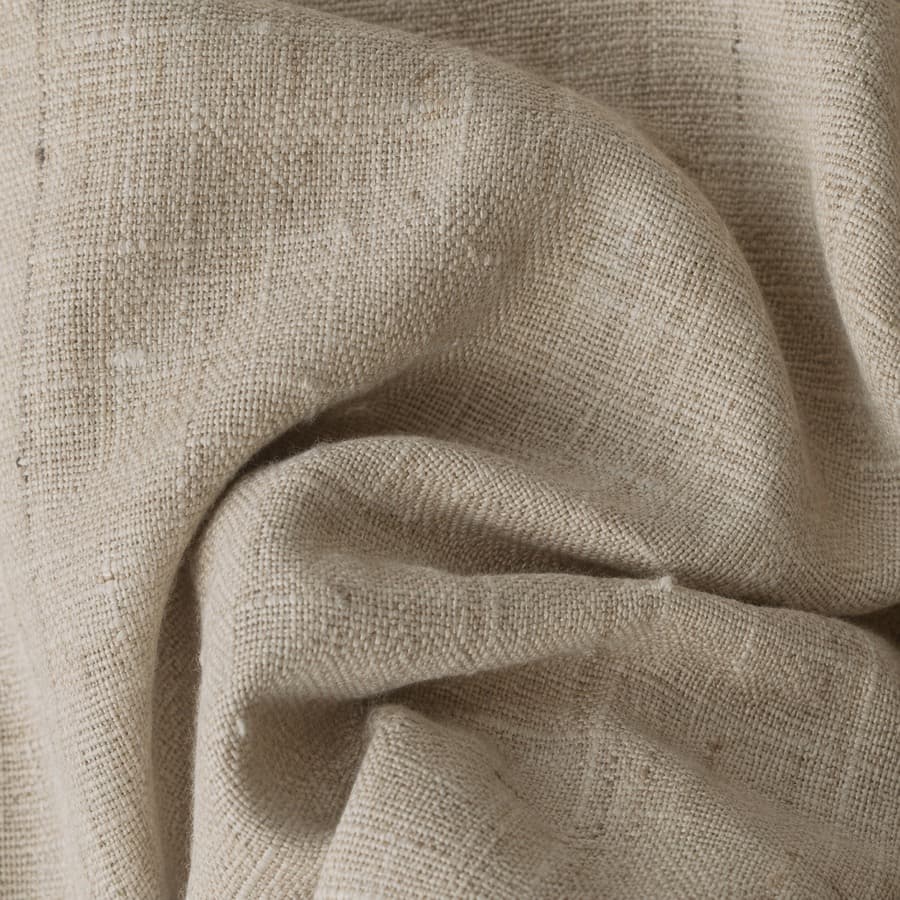
  • Macro photograph of natural oatmeal linen weave.Linen
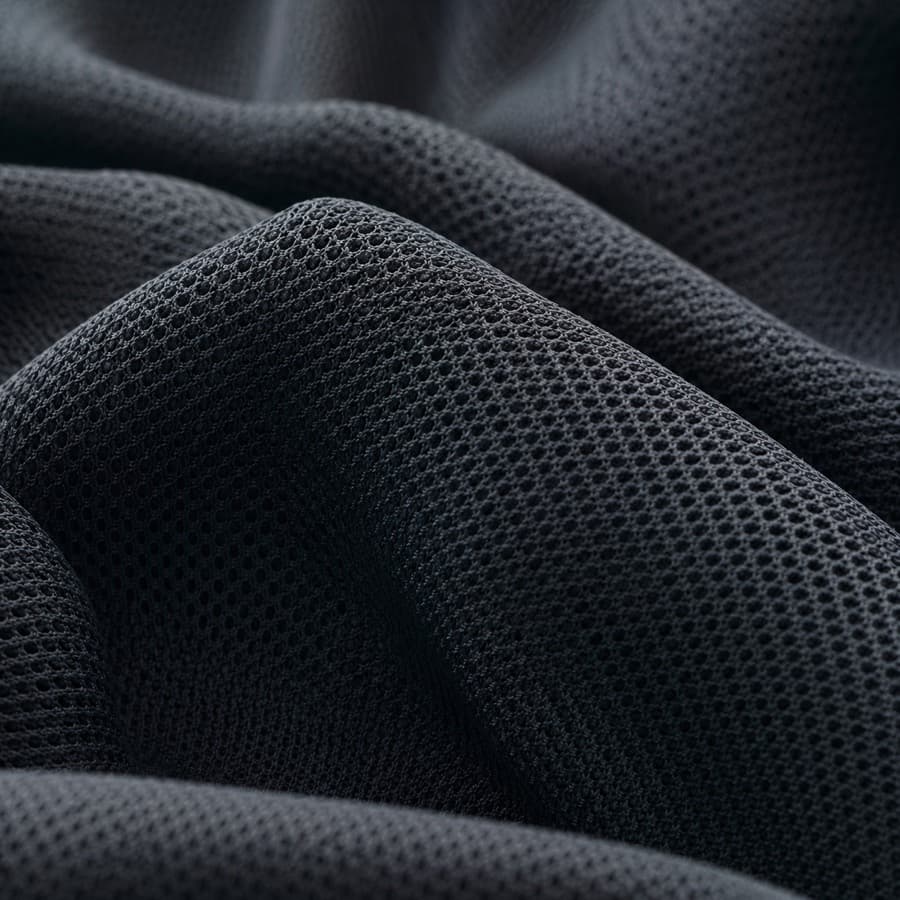
  • Macro photograph of dark technical performance mesh.Performance mesh
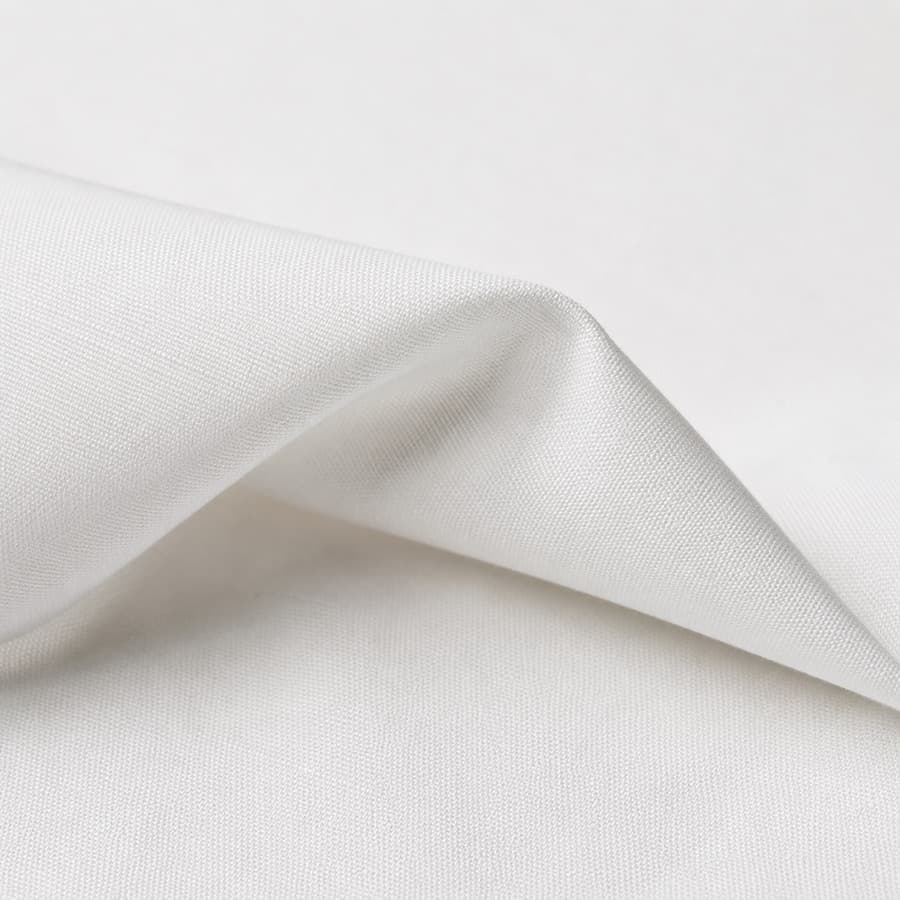
  • Macro photograph of crisp white cotton poplin.Cotton poplin
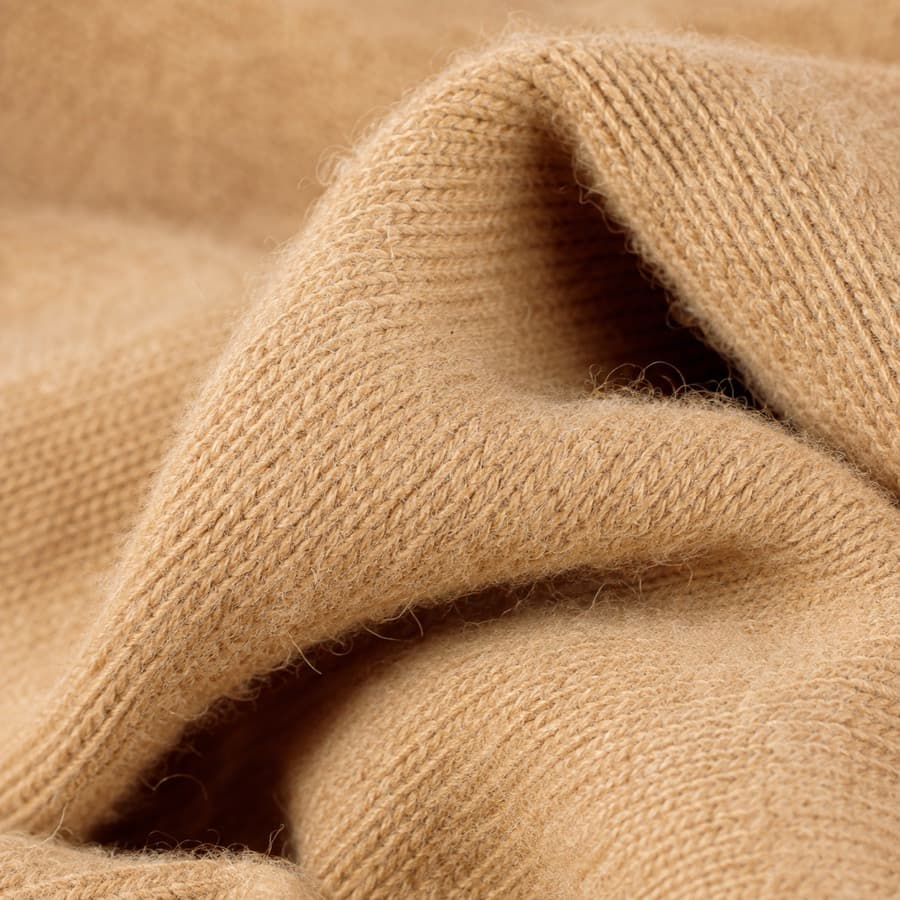
  • Macro photograph of camel cashmere knit.Cashmere
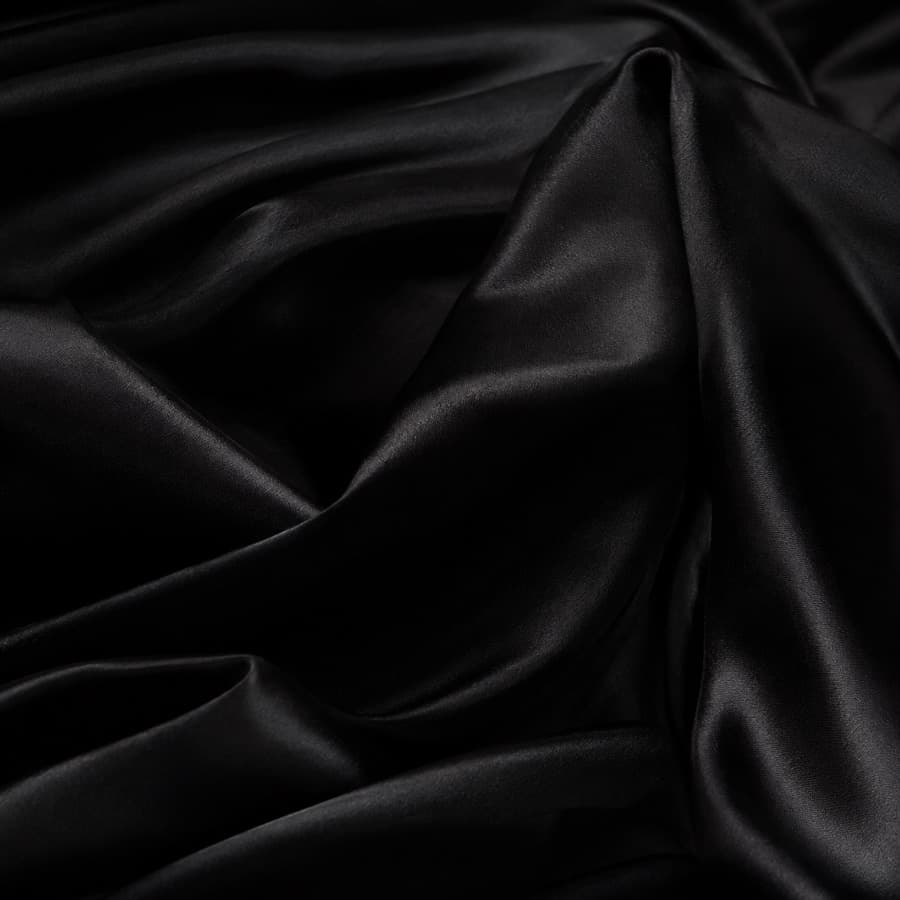
  • Macro photograph of black viscose satin lining.Viscose lining

Plate 09 · The three rules we hold ourselves to

Ruining a jumper cannot be undone, so being careful is the product.

A

What the label forbids and what we think are different things

The two never share a block. Anything we are not certain the label says goes into the third block, under “The label does not say”, and that block is never empty — because a label never covers the stain, the water or your machine.

B

You always see how sure we are

Every reading carries a confidence value. Below our threshold the card opens with a warning in full sentences, not a small grey number. If a label is worn away, we say we cannot read it and give you the gentlest handling instead of a guess.

C

We do not sell you anything to wash it with

No detergent recommendations, no brands, no product links, no affiliate arrangement to disclose because there is none. We describe the category of handling the label permits, and stop there.

Plate 10 · What it costs

Free is enough for the jumper in your hand. Paying is for the whole wardrobe.

Ten readings a month covers the garment you are holding right now. What it does not cover is the person who wants to go through a whole wardrobe once, keep a file of it, and print the cards out.

That is the only thing behind the paywall: how many times, the print-ready card, and the wardrobe file. The warning half of the answer is never withheld — on the free plan the watermark is kept clear of the block that says what the label forbids.

Prices are in US Dollars (USD) and are total prices inkl. MwSt.

Free

50 credits / month

For the jumper you are holding right now.

0.00 USD

Free of charge. No card required, no trial that turns into a subscription.

  • 10 label readings a month
  • Full three-part result: forbidden, allowed, not covered
  • Follow-up questions about the garment in front of you
  • On-screen care card
  • The on-screen card carries a watermark
  • No print-ready card
  • No wardrobe file

Care

400 credits / month

For doing the whole wardrobe once and never guessing again.

8.00 USD

Billed every month, inkl. MwSt.

Renews automatically every month on the same date until you cancel. Cancel any time before the renewal date and nothing further is charged.

  • Unlimited label readings
  • No watermark
  • Print-ready care card, A4 and pocket size
  • Wardrobe file — every garment you have read, kept
  • Re-lay-out a card as often as you like
Choose Care

Cancel in your account under Plan and allowance — same number of clicks as subscribing. AGB · Widerrufsrecht

Wardrobe

1500 credits / month

For a household, a shared flat, or a rail of other people's clothes.

24.00 USD

Billed every month, inkl. MwSt.

Renews automatically every month on the same date until you cancel. Cancel any time before the renewal date and nothing further is charged.

  • Everything in Care
  • Batch reading — photograph a stack of labels in one go
  • Shared wardrobe file for up to six people
  • Priority queue
Choose Wardrobe

Cancel in your account under Plan and allowance — same number of clicks as subscribing. AGB · Widerrufsrecht

Full detail, including what a credit is spent on and what happens to an unused allowance, is on the pricing page.

Plate 11 · Questions, including the awkward ones

What happens when we are wrong, and what happens when the label is gone.

01

I followed what you said and the garment was ruined. What now?

Write to support@korrektmode.com and tell us what the card said and what happened. If we misread the label we want to know, and we will correct the reading.

But we have to be plain about the limit: Washread interprets what is printed on a care label. It does not inspect your garment, it does not know its history, and it cannot guarantee an outcome. A label does not cover every situation either — it says nothing about the stain, the water, your machine, or damage the garment already had.

Washread does not accept responsibility for damage caused by washing, drying or ironing. Your statutory rights as a consumer are not affected by that, and they are set out in full in the AGB and the Widerrufsrecht page.

02

The label has fallen out. Can you guess what it said?

No. We do not guess, and we will not infer a washing instruction from how a fabric looks or feels.

If there is no label, or the label is worn past reading, Washread says so. What you get instead is the most conservative handling that could apply — the gentlest thing available — clearly marked as a precaution rather than as an instruction the garment carries.

The same applies to a partly worn label. We read the part that is legible, mark the rest as unread, and put it under “The label does not say”.

03

Do you keep my photographs, and do you train on them?

Your photographs are not used to train any model. Not ours, not anyone else's. That is a commitment, not a setting.

A label photograph is kept only as long as it takes to produce your reading, and after that for 30 days so you can open the card again. On a paid plan you can keep a garment in your wardrobe file, in which case the photograph is kept until you delete it. You can delete any reading, any garment, or your whole account at any time, and deletion removes the images.

The detail — categories, legal basis under Art. 6 DSGVO, retention, recipients, transfers outside the EU — is on the Datenschutz page.

04

How accurate is it?

Accurate enough to be useful, and never presented as more certain than it is. Every reading carries a confidence value. Below our threshold the card opens with a plain warning that part of the label could not be read clearly and that the result should be treated as a guess.

Recognition can be wrong, and it is most likely to be wrong when a label is worn, faded, creased, or photographed in poor light. Where we are unsure we say so rather than filling the gap.

Washread is not professional advice, and it must not be used for medical, legal, financial, safety, employment, credit, housing or judicial purposes. The KI-Hinweis page sets this out in full.

05

Which detergent should I use?

We do not say, and we will not. Washread does not recommend detergents, brands or products, and there are no product links anywhere on this site.

The reason is simple: a detergent recommendation is a claim about how a specific product will behave on a specific garment, and getting that wrong causes exactly the damage this site exists to prevent.

What we do describe is the category of handling the label permits — cold hand wash, 30 °C gentle cycle, professional dry cleaning — which is what the label itself is talking about.

06

Can I get a refund, and what about the 14-day right of withdrawal?

As a consumer in the EU you have a 14-day right of withdrawal on a distance contract (§ 312g BGB). For digital services that right can end early, but only if you have expressly asked us to start immediately and confirmed that you understand you then lose it — which is why checkout asks you two separate questions, neither of them pre-ticked, and repeats both in your order confirmation email.

If you do not tick both, the 14-day period runs normally and you can withdraw within it.

The full text, including the model withdrawal form you can use, is on the Widerrufsrecht page.

07

How do I cancel?

In your account, under Plan and allowance. Cancelling takes the same number of clicks as subscribing did, and it does not require you to write to anyone or explain yourself.

Cancelling stops the next renewal. Your plan keeps working until the end of the period you have already paid for, and then the account drops to Free.

08

What happens to an allowance I have not used?

It does not carry over. Each period starts with the full allowance for your plan, and anything unused at the end of the period lapses.

There are no credit packs and no stored balance. An allowance is permission to use the service, not money: it cannot be bought separately, topped up, cashed out or transferred, and it has no monetary value. That is stated in the AGB as well.

If you run out before the period ends, you can move to a larger plan; the change takes effect immediately.

09

Is there a minimum age?

Yes. You must be 18 or older to hold a paid Washread account, and you must have the legal capacity to enter into a contract.

If you are under 18 you may use the free reading with the consent of a parent or guardian, who is responsible for the account.

Go and get the
jumper.

Photograph the tape in the seam. You will know in a few seconds what you are allowed to do with it — and what the label never told you.

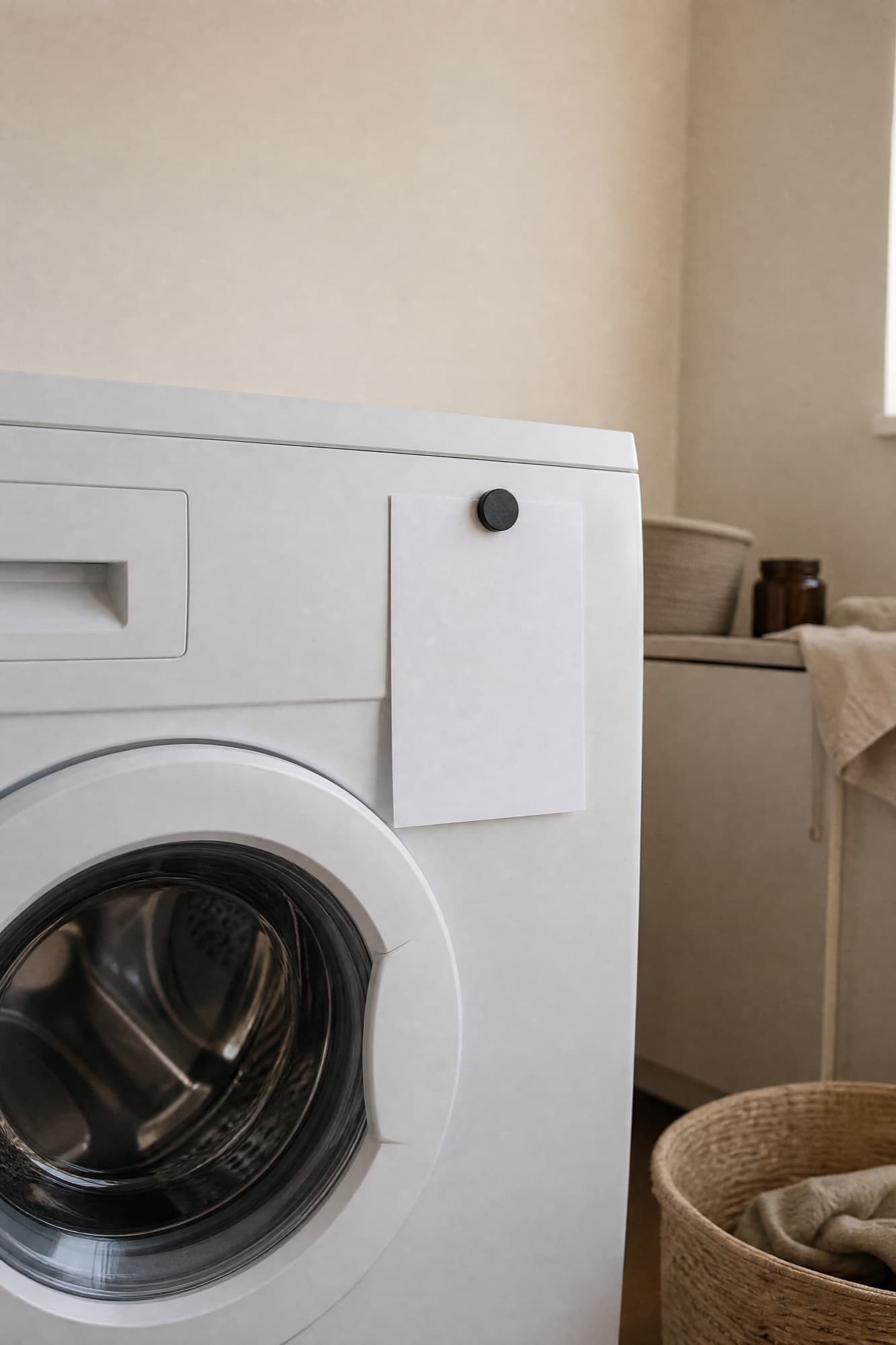
A plain white card held by a small black magnet on the door of a white washing machine in a utility room.
Where the card is supposed to end up.